

A sponsored webinar runs. It goes well. Members engage. The sponsor leaves happy.
And then you never hear from them again.
No complaints. No conflict. They just don’t renew.
Most associations chalk this up to evidence that sponsored content just doesn’t work as a sustainable revenue line. Wrong sponsor, wrong timing, wrong topic—maybe the whole approach was a mistake.
In reality, the issue is rarely any of those things. It’s structural—and it starts with a distinction that doesn’t get made nearly enough.
Transactional sponsorship and content sponsorship are not the same model.
Transactional sponsorship—logo placements, naming rights, booth buys—is built around a one-time exchange. You sell a slot, deliver the placement, and both parties understand what was exchanged. It has worked for decades, and it still does. This is the model most associations know from events.
Content sponsorship operates on different terms. When a sponsor steps into your webinar series, your podcast, or your editorial calendar, they’re not buying visibility—they’re entering a relationship with your membership. Success isn’t measured in impressions. It’s measured in trust, in qualified leads, and in whether your members actually walked away with something valuable.
Most associations run content sponsorship like it’s transactional. That’s where the program breaks down—often long before renewal is even on the table.
Transactional Sponsorship Works—Until You Try to Apply It to Content
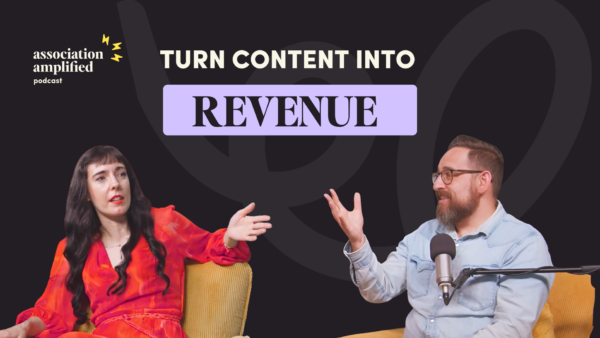
From the Podcast
Why Sponsors Don’t Renew Content (Even When It Works)
A candid conversation on renewal, brand awareness limits, and building sponsorship programs that sponsors actually renew.
Transactional sponsorship has a clear value exchange baked in. A company puts their name on something—a conference, a luncheon, a session track—and in return, they get visibility in front of your membership. The association delivers the audience, the sponsor gets exposure, and everyone understands the terms. This model works particularly well at events.
Partnership-driven sponsorship asks something fundamentally different of both parties. Instead of buying a placement, the sponsor is buying into a conversation—one that your members are already having. The association is curating a point of view, maintaining editorial standards, and implicitly vouching for whoever shows up in that space. That’s a much higher bar than simply providing access.
The metrics reflect this, too. Transactional sponsorship success is measured by attendance numbers, booth traffic, and logo impressions. Partnership-driven sponsorship success looks like webinar registrations, on-demand views, qualified leads, and whether the sponsor’s message actually resonated with the right people. One is about reach. The other is about relevance.
This distinction matters because the expectations for each model are completely different—for your team and your sponsors. A company that has bought a table at your annual gala for five years isn’t automatically ready to appear as a credible thought leader in a member webinar. If your association approaches content sponsorship with the same transactional mindset you bring to event inventory, both sides will be disappointed.
This is the core problem with bringing transactional thinking into content. In an event context, transactional works fine—it’s expected, even. But content sponsorship, when done well, is an ongoing relationship with your members.
The Transactional Trap
Here’s the pattern we see most often. An association decides to open up some content inventory—usually a webinar or two, sometimes a podcast slot—and puts out a call to sponsors. A few takers come in. The shows run. Everyone’s reasonably happy. And then, quietly, the program stalls.
The reason is almost always the same: the relationship was built on a transactional foundation that has no renewal engine. The sponsor bought a time slot. They showed up, delivered what they had, got what they paid for, and moved on. There was nothing pulling them back.
This is the core problem with bringing event sponsorship thinking into content. In an event, transactional is fine—expected, even. But content sponsorship, when done well, is an ongoing relationship with your members. It builds over time. A sponsor who shows up consistently, contributes genuinely, and becomes a recognizable voice in your community is worth far more to your association and your members than one who runs a single webinar and disappears.
The stakes here are real. For the third consecutive year, generating non-dues revenue topped the list of challenges experienced by associations—a concern shared by 61% of respondents in the 2025 Association Benchmarking Report from Naylor. The pressure is pushing more organizations toward integrated sponsorship models that go beyond one-off transactions.
The contrast is clear when you see it side by side. A company that sponsors your annual conference has a reason to return next year: the event is happening again, and they want to be in the room. A company that sponsored a one-off webinar doesn’t have the same incentive, unless your association creates one.
That’s the shift. Content sponsorship is still inventory—it’s just a different kind. Instead of a one-time placement, it’s a year-round program with recurring episodes, a growing audience, and a reason for sponsors to keep showing up.
The Editorial Control Problem
When associations open up content sponsorship inventory, the default move is to put out a call for submissions and let sponsors bring whatever they have. And what sponsors almost always bring is a deck.
It makes sense from their side. They have a product launch, a new service, an announcement worth making—and here’s a captive audience of exactly the right people. So they show up, present what they’ve got, and call it thought leadership. The webinar runs. Members attend. And then that sponsor has nothing left to say until the next launch cycle, which might be six months away. Or a year. Or never.
This is what we call the editorial control problem, and it’s one of the main reasons content sponsorship programs fail to build momentum. When the sponsor drives the content, the program depends entirely on whatever they have ready. There’s no throughline, no consistency, and no reason for members to attend regularly, because they never know what to expect.
The fix isn’t complicated, but it does require a mindset shift. Your association has an educational calendar. You know what topics your members care about, what conversations are happening in your industry, and what questions keep coming up year after year. That’s your editorial foundation, and it’s something your sponsors can’t access on their own.
Rather than asking sponsors what they want to talk about, bring them into what you’re already building. Find where their expertise genuinely intersects with your members’ interests. Position them as a contributing voice in a conversation that’s already happening, don’t just give them a blank stage and hope for the best. The difference in results and member engagement is significant.
There’s a practical upside for sponsors, too. A company that appears as a recurring thought leader in a well-structured series doesn’t need a new product announcement every time. They just need to know their subject, which, if you’ve chosen the right sponsors, they already do. The association’s job is to help them see that and to build a format that makes it easy to contribute without needing a finished presentation every time.
What Partnership-Driven Sponsorship Looks Like
The shift from transactional to partnership-driven sponsorship is philosophical and practical. It changes sales conversations, how you onboard sponsors, and what you ask of them once they’re in.
In practice, instead of presenting a sponsor with a menu of available slots, open the conversation differently. Ask them where they think they can genuinely contribute to your membership. Share your editorial calendar and explore where their expertise intersects with what your members are already asking about. You position them not as a buyer of inventory, but as a partner in something your community actually needs.
That repositioning changes how sponsors show up. Instead of arriving with a product deck and an hour-long monologue, they’re participants in a conversation your members already care about. This gives sponsors a real reason to keep coming back. The format shifts, too. The most effective sponsored content programs are built around conversation, not just presentation: a host asking sharp questions, a sponsor sharing real expertise, and members walking away with something they couldn’t get elsewhere.
Associations that make this shift see measurable results. Some have turned content sponsorship into a six-figure annual revenue line. The North American Meat Institute built a $2 million sponsorship program by taking a needs-based approach to sponsor partnerships, growing what was once a modest effort into one of the most successful in the sector.
It’s also worth noting what this does for the sponsor relationship. When a sponsor is brought in as a genuine partner, positioned thoughtfully within your programming, and given a format that lets them shine, the dynamic shifts from vendor to community member. They remember it. They come back. And they often bring bigger conversations about what else is possible.
The Conversation That Changes Everything
Most sponsorship sales conversations follow the same script. Here’s what we have available, here’s the pricing, here’s what you’ll get. The sponsor reviews the options, picks what fits their budget, and everyone moves on. It’s efficient. It’s familiar. And it’s leaving revenue and long-term relationship value on the table.
The shift is simpler than it sounds. Instead of leading with inventory, lead with curiosity. Share your editorial calendar with them and ask where their expertise could genuinely add value to what you’re already planning. Then ask what they’d want your members to understand about their space that they don’t already. These questions do something a rate card never can—they open a real conversation about contribution, not just consumption.
This matters more than it might seem. Sponsors who are asked what they can contribute think differently about the relationship than those who are asked what they want to buy. One approach creates a vendor. The other creates a partner. And partners don’t quietly disappear at renewal time. They come back because they feel invested in what you’re building together.
There’s another practical advantage here that’s easy to overlook. Your existing sponsors—the ones already buying booths, taking logo placements, and showing up at your annual event—are your warmest prospects for partnership-driven sponsorship. They already have a relationship with your association, and the conversation isn’t a cold pitch; it’s an upgrade. You’re not asking them to spend more for the sake of it. You’re offering them a way to do more with the access they already value.
That conversation, done well, changes how sponsors see your association. Instead of a single line item in a marketing budget, you become a real channel—a place where they can build credibility, reach the right people, and contribute to a community that matters to their business. That’s a different relationship, and it’s one that evolves over time in ways transactional sponsorship never does.
Where to Start This Week
The easiest place to start is the sponsor you already have.
Pull up your current sponsor list or your list of lapsed sponsors who haven’t renewed in the last year or two. Find one company whose expertise is genuinely relevant to what your members are working through right now. Not the biggest spender. Not the longest relationship. The best fit. Then reach out—not with a rate card, but with a question. Tell them you’re building your editorial programming for the year and you think they have something valuable to contribute. Ask what they’d want your members to understand about their space.
That’s it. That’s the first move.
The second is an internal step. Look at your programming calendar and identify two or three topic areas where outside expertise will strengthen what you’re already offering members. Those are your content sponsorship opportunities—not blank slots to fill, but specific conversations waiting for the right voice. When you approach sponsors with that level of specificity, the conversation changes immediately. You’re not selling them something. You’re inviting them in.
Content sponsorship done well isn’t a revenue line—it’s a program. One that takes some intentionality to build, and rewards consistency over time. But the associations that commit to it aren’t just generating more non-dues revenue. They’re building a more connected, more valuable community—for their members and for the partners who show up in it.
The first step is easier than you think. Start with one sponsor, one question, and one conversation that isn’t focused on what they want to buy.